Target Is Not Going to Change: Black Consumers Have to Decide What Comes Next
Target is not going to change. That is the conclusion I keep returning to as I consider the retailer's latest controversy involving a Halloween costume that was widely criticized for evoking Blackface and racist minstrel imagery. For me, this is not simply another corporate misstep that requires an apology and a product removal. It is part of a much larger conversation about how Black consumers are represented, how racialized imagery continues to circulate through fashion and retail, and what happens when the people making decisions do not recognize the historical significance of the imagery they approve.
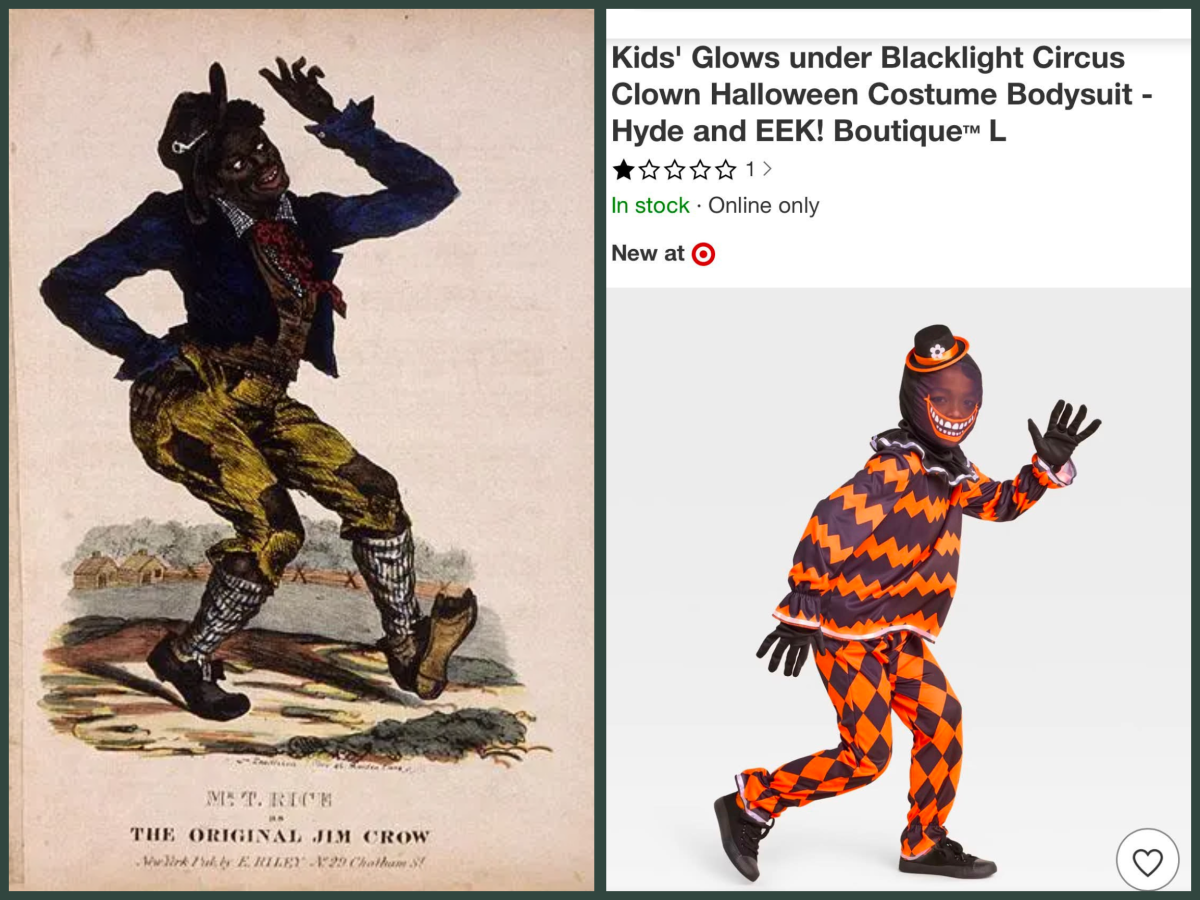
As a Black woman who earned her PhD researching Black women, luxury retail, consumer identity, and racist treatment in retail spaces, I have spent years studying the relationship between Black consumers and the places where we spend our money. My research specifically considers how racialized experiences can shape the way Black consumers understand retail environments, their purchasing decisions, and their willingness to continue supporting particular retailers. Racist iconography is part of that conversation because imagery is never simply an aesthetic decision. Fashion does not exist outside of history, and the images placed on products carry meanings that existed long before a contemporary designer or retailer decided to use them.
It is important to establish what we are actually talking about when we use the term Blackface. Blackface is not simply the act of putting dark makeup on one's face. It is a racialized performance tradition that developed in nineteenth-century American popular culture in which white performers darkened their faces and exaggerated physical features, speech, movement, and behaviors to construct degrading caricatures of Black people. Blackface minstrelsy became a major form of entertainment beginning in the 1830s, and those performances helped establish stereotypes portraying Black people as unintelligent, lazy, hypersexual, criminal, foolish, and inferior.
The history of Blackface also needs to be distinguished from the history of the Black Codes. The Black Codes were laws enacted throughout the South beginning in 1865 following emancipation, designed to restrict the freedom and economic mobility of formerly enslaved Black people and maintain elements of the racial hierarchy created under slavery. Blackface developed earlier, but both belong to a larger history in which Blackness was constructed, controlled, restricted, and represented through systems of racial power. Understanding that history is essential to understanding why racist imagery continues to matter today.
This is not obscure history. This is not information that is inaccessible to the average person. The Smithsonian's National Museum of African American History and Culture, the Library of Congress, and countless historians have documented the history and cultural impact of Blackface and minstrel imagery. We have extensive records demonstrating how these representations helped normalize the idea that Black people could be reduced to caricatures for entertainment and consumption. The problem is not that the history cannot be found. The problem is that the history is not being taught widely enough, particularly to the people who are entering industries responsible for producing and distributing visual culture.
That is what makes the continued appearance of this imagery in fashion and retail particularly disturbing.
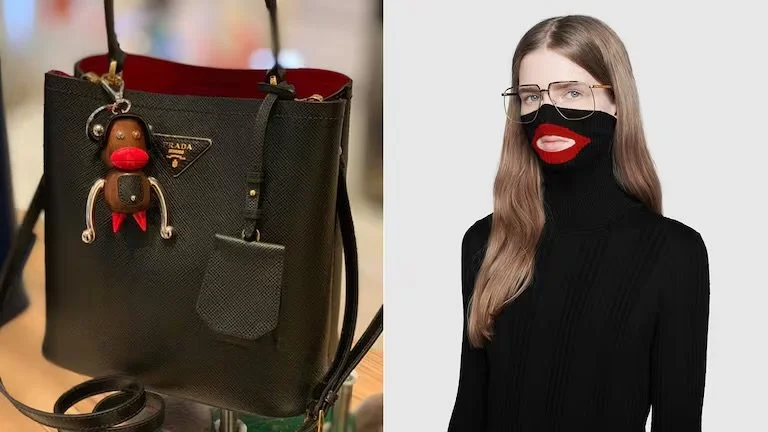
Target is not the first major fashion or retail company to encounter this criticism. Prada faced significant backlash in 2018 after a storefront display and product were criticized for resembling racist Blackface imagery. Gucci faced widespread criticism in 2019 after releasing a balaclava sweater with features that consumers said evoked Blackface. Both companies removed the products and issued apologies. These incidents should have been opportunities for the fashion industry to learn that racial imagery has a history and that designers cannot separate contemporary products from the cultural meanings attached to the imagery they use.
Yet here we are again.
Target's situation is particularly frustrating because the company has spent years cultivating an image of itself as a retailer committed to diversity and inclusion and has benefited from relationships with Black consumers, Black entrepreneurs, and Black creative talent. Target has worked with highly recognizable Black creatives, including Tabitha Brown and Kelana Barfield, both of whom have established themselves as influential figures within their respective industries. Those collaborations can be meaningful, but the presence of Black talent within a company's marketing strategy is not necessarily evidence that Black people have meaningful power within the company's decision-making structures.
That distinction matters.
Representation should not simply mean that a Black person appears in a campaign or collaborates on a collection. Representation should also mean that Black employees, designers, buyers, marketers, product developers, and executives have the authority to question decisions that may harm Black consumers. They should be able to look at an image and say that something is historically problematic without being dismissed as overly sensitive, difficult, or incapable of separating history from fashion.
If a Black employee was involved in the process of approving this costume, I would want to know whether that person felt empowered to challenge it. If there were no Black employees with meaningful decision-making authority involved in the process, I would want to know why. And if someone did raise a concern and that concern was ignored, that raises an even more serious question about the culture within the organization.
This is where my concern extends beyond Target and into fashion education.
As fashion professors, we are preparing students to enter an industry where they will make decisions about products, imagery, campaigns, merchandising, textiles, styling, casting, packaging, and marketing. Our students will become designers, buyers, merchandisers, patternmakers, product developers, creative directors, and brand strategists. Eventually, many of them will sit in rooms where someone presents an idea and asks, "What do you think?"
We have to prepare them to recognize when the answer needs to be, "I think this is problematic, and here is why."
Fashion education should provide students with the historical and cultural knowledge necessary to understand racist iconography, cultural appropriation, representation, and the relationship between fashion and racial power. Students should learn how to identify problematic imagery and, just as importantly, how to communicate those concerns within professional environments where they may not hold the most authority.
This is particularly important because conversations about race have increasingly become entangled with debates about diversity, equity, and inclusion. I want to be very clear about something that is frequently misunderstood: racism is not Critical Race Theory, and Critical Race Theory is not the study of racism itself.
Racism is a social and historical phenomenon involving racial hierarchy, prejudice, discrimination, unequal treatment, and systems of power. Critical Race Theory, by contrast, is an academic framework that emerged primarily from legal scholarship and examines how race and racism can operate within laws, institutions, and systems of power. CRT is one framework through which scholars can analyze questions about race and racism; it is not the definition of racism, nor is racism dependent upon CRT.
We should not make the conversation so politically complicated that fashion professionals become afraid to identify something as racist when the historical context and impact are clear. A company does not need a DEI department to understand that Blackface is historically racist. A designer does not need to study Critical Race Theory to understand that racial caricature has a history of dehumanization. What is required is historical knowledge, cultural competency, professional responsibility, and the willingness to listen to the people affected by the imagery.
Target's decisions also have to be considered within the larger context of its relationship with diversity and inclusion. The company significantly scaled back elements of its previous DEI commitments in 2025, including ending certain diversity goals and changing how it approached its inclusion initiatives. For Black consumers who were already questioning the sincerity of those commitments, another controversy involving racialized imagery does not exist in isolation. It becomes another piece of a larger relationship that consumers are evaluating.
That relationship matters because shopping is about more than exchanging money for a product. Retail environments communicate belonging, recognition, value, and dignity. My research into Black women and luxury retail examined precisely this kind of relationship: how Black consumers navigate spaces that have historically excluded, stereotyped, or mistreated them and how those experiences can influence their relationship with retailers.
There is nothing unreasonable about a Black consumer deciding that a retailer no longer deserves their money.
Consumers are allowed to reconsider where they shop. They are allowed to decide that an apology is insufficient. They are allowed to recognize patterns and determine that the relationship they have with a retailer is no longer one they want to maintain. Consumer spending is one of the few forms of direct power available to individuals within a marketplace, and Black consumers do not owe corporations continued loyalty simply because those corporations have previously marketed themselves as inclusive.
For me, the question is no longer whether Target can release another statement explaining that it missed the mark. The more important question is whether Black consumers should continue giving Target the opportunity to miss the mark.
I have written before about Target's relationship with DEI, and I remain deeply skeptical of the company's commitment to Black consumers when its corporate actions and marketplace decisions continue to raise these questions. At some point, repeated failures cannot continue to be treated as isolated accidents. Either the organization lacks the knowledge necessary to recognize the problem, lacks the internal structures necessary to stop the problem, or lacks the willingness to prioritize the consumers who are telling them that there is a problem.
None of those possibilities should be acceptable.
This is also why I am less interested in simply telling Target to "do better." I want the fashion industry to become better equipped to understand why these things happen in the first place. I want fashion students to understand that a product can be technically well designed and still be culturally harmful. I want future designers and buyers to understand that historical knowledge is part of their professional responsibility. I want Black employees to feel empowered to challenge decisions without fearing professional consequences. And I want consumers to understand that they have every right to decide where their money goes.
Target may remove this product. It may apologize. It may review its approval process. But those actions do not obligate Black consumers to restore their trust.
For me, this conversation is ultimately about more than one costume and more than one retailer. It is about the responsibility of fashion and retail professionals to understand the historical meanings attached to the images they put into the marketplace, and it is about the responsibility of consumers to decide what treatment they are willing to accept in exchange for their dollars.
As a researcher, professor, and Black consumer, I am not interested in pretending that these conversations are new. The history is documented. The scholarship exists. The consequences have been demonstrated repeatedly. What we need now is the willingness to actually teach that history, apply it to contemporary fashion, and listen when consumers say that something is wrong.
I will continue this conversation on The Overdressed Black Girl podcast, where I will talk more about racist iconography, Black consumer behavior, fashion education, and the research that informed my dissertation.
Black consumers do not have to continue participating in retail relationships that make us question whether we are respected. We are allowed to say no, and we are allowed to decide that our money belongs somewhere else.